Layer a Quieter Room
Beyond visual warmth, soft furnishings perform crucial acoustic work. By breaking hard reverberations, textiles quiet the subtle auditory hum of the household.
The Sound-Dampening Power of Fabric
Modern residential rooms frequently suffer from too many parallel hard planes: plastered ceilings, bare glazed windows, and engineered wood flooring. When evening arrives, every creak from the hallway or tire noise from the street outside reflects across these slick boundaries.
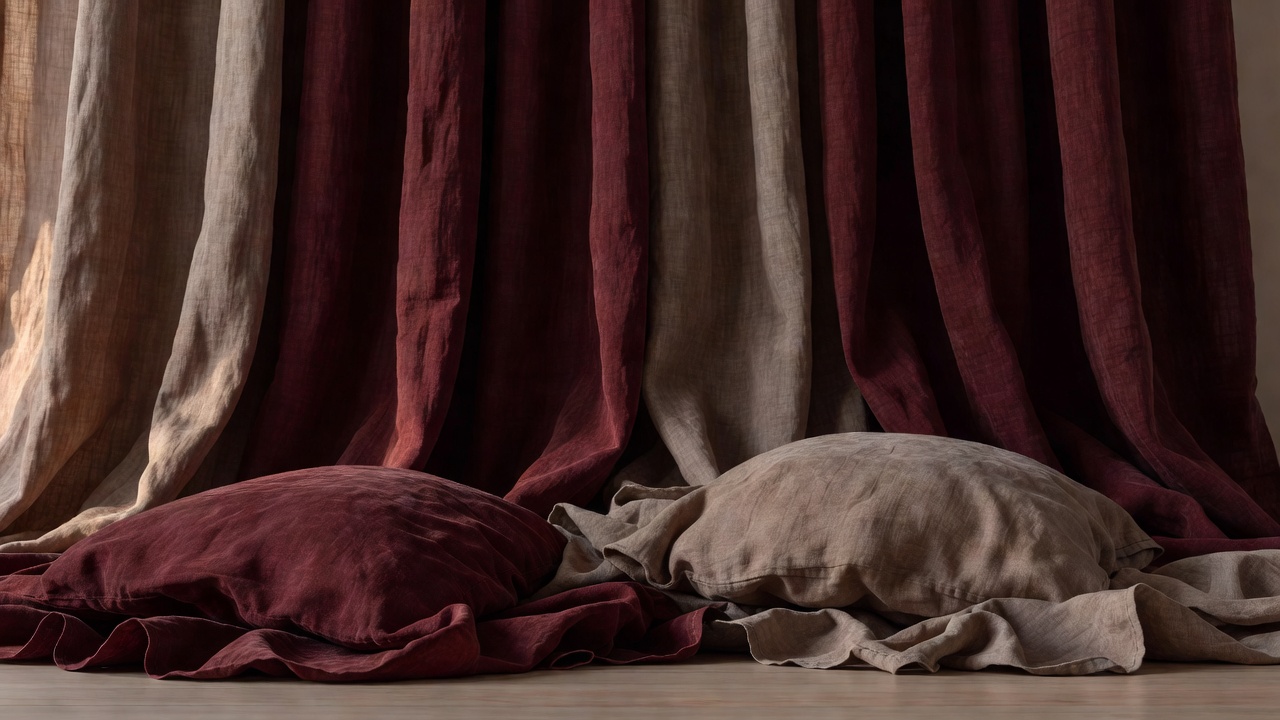
Introducing substantial textiles is the most natural way to introduce gentle acoustic absorption. Floor-length curtains crafted from double-weave linen or textured brushed wool disrupt sonic flutter. Even a dense waffle throw layered at the foot of the mattress captures high-frequency hiss, immediately making the bedroom feel like a grounded haven.
Calming Bedroom Palettes
Sterile white rooms often amplify shadows and feel cold once dusk arrives. To produce an embracing cocoon, look toward tones rooted in natural mineral pigments and autumn twilight:
| Color Family | Sensory Weight | Pairing Material |
|---|---|---|
| Deep Mulberry & Port | Grounded, warm, visually intimate | Untreated oak, aged brass hardware |
| Toasted Sand & Ochre | Reflective, gentle daylight glow | Washed natural linen, clay pottery |
| Subdued Sage & Moss | Cooling, restorative, organic | Flax weaves, honed travertine |
| Smoked Peat & Umber | Protective enclosure, shadow-tolerant | Brushed alpaca blankets, amber glass |
Layering the Bed
A bed that feels welcoming does not need an army of ten decorative throw pillows that must be cast onto the rug before sleep. Instead, build tactile depth with three functional layers: a smooth, breathable cotton-percale bottom sheet, a medium-weight linen duvet, and a dense hand-loomed wool coverlet folded neatly across the base for cold mornings.